

Fraud Blocker February 2026 Wealth Index Report | Saltus

Saltus Wealth Index Report

February 2026

Share this report:

Saltus Wealth Index Report The high net worth individual’s view of their position, prospects and potential...

February 2026

Share this report:

Foreword

Welcome to the ninth Saltus Wealth Index Report...

Jon Macintosh
Jon Macintosh

Managing Partner

Twice a year we canvas the views of high net worth individuals (HNWIs) in the UK. Their views matter, because these are the people whose creativity and hard work will drive prosperity in the UK in the medium and long term. In the short term they pay the tax that supports the Government’s spending programme.

The picture they paint is not a pretty one.

With our collaborator from the University of Bristol, Dr Michael Peacey, we have created an Index, a composite of some key indicators that the survey has tracked since its inception in October 2021. The Index currently stands at 61.3. Not the lowest it has been (that milestone was authored by Liz Truss) but trending down from the peak of 66.9 it reached immediately after the election of the current Government.

Our respondents feel that they are taxed too much and that some taxes are unfair. They particularly feel the impact of tax because the pressures on them have increased substantially over the past few years. They have felt responsible for their adult children for some time, but what our research shows is that they are increasingly also supporting their parents, often even helping them with day to day spending. However, these concerns about tax are not just personal. HNWIs also identify certain taxes as holding back the economy.

It all feels like a bit of a grind with not much hope in sight.  For many, personal consumption is down, but significantly more material sacrifices are being made. The impact of VAT on private education is leading to some parents to switch schools and important long term goals have come under pressure; overwhelmingly HNWIs are not taking advantage of the full allowance that they could contribute to their pension.

Many respondents had voted for Labour at the last election, but substantial numbers now regret that decision. Many predictable concerns are cited for this softening of support, but they are joined by a new one: the collapse in employment prospects for university graduates.

Given this grim context, it is no surprise that so many people in this constituency are considering relocating abroad.

As always, my thanks go to our partners at Censuswide, who manage the survey, and Dr Peacey, who helps us understand this valuable data. I hope you enjoy the Report.

Commentary

The Saltus Wealth Index provides a simple barometer of the confidence and concerns that 2,000 UK high net worth individuals (HNWIs) have relating to the UK economy. The Index ranges between 0 and 100, with higher values describing higher confidence in (and fewer significant concerns with) the UK economy and personal finances.

The Index now stands at 61.3, below the most recent value of 64.7 recorded in the eighth edition of this Index (SWI8, August 2025), but above the low point of 58.2 reached one year ago (SWI7, January 2025). This pattern highlights a fragile and uneven recovery in sentiment. A recurrent theme in recent Saltus Wealth Index Reports is the extent to which global geopolitical volatility shapes the outlook of HNWIs in the UK, and in this respect the past six months have been as unpredictable as any in recent decades.

Following the sharp deterioration in confidence captured in SWI7, the subsequent rebound recorded in SWI8 (albeit caveated at the time by the fact that research coincided with a strong recovery in financial markets following the trough of the Trump tariff period) raised hopes that sentiment might be stabilising. The latest data suggest that this improvement has not been sustained. While confidence has not fallen back to the depths seen previously, momentum has clearly stalled and reversed for most of the components in the Index. The result is an Index that remains trapped within a relatively narrow range, reflecting uncertainty rather than direction.

Nevertheless, there are two limited areas of improvement. Concerns around inflation have eased slightly and fewer respondents now report anxiety about money. Given the central role inflation has played in shaping behaviour and sentiment in recent years, this moderation is noteworthy and provides some support to the overall Index.

However, these gains are outweighed by broader deterioration elsewhere. Compared with August 2025, HNWIs’ confidence in both the UK economy and their own finances has weakened. Respondents also expressed growing unease about the tax burden, with less than half now thinking their tax burden is appropriate (currently 49%, down from 57%). Despite significant tax changes announced in the last year, the survey still finds widespread nervousness that there will be further changes – which clearly complicates long term planning. These factors exert a stronger downward pull on confidence than the modest easing in inflation-related concerns can offset.

Taken together, the current Index value 61.3 (and the responses of the survey more broadly), points to an environment characterised by caution rather than recovery. Confidence has lifted from its weakest point, but the setback relative to SWI8 underlines how sensitive sentiment remains to policy uncertainty, geopolitical risk and concerns about growth. For HNWIs, the prevailing mood seems to be one of vigilance: acknowledging marginal improvements, while remaining wary of further shocks that could quickly undermine confidence once again.

Executive summary

Confidence in the UK economy stalls

The latest Saltus Wealth Index shows that the tentative recovery in confidence among UK high net worth individuals (HNWIs) recorded in the last report, published in September 2025, has gone into reverse as concerns around taxation, growth and political decision making have begun to weigh more heavily.

The Index itself has fallen from 64.7 six months ago to 61.3 today, driven primarily by a drop in confidence in the UK economy. Overall, HNWIs’ confidence in the UK economy has fallen from 66% to 59% since the last Saltus Wealth Index Report, widening the gap from the 84% recorded in August 2024 ahead of the Labour Government’s first Budget.

The latest data also show that HNWIs’ confidence in their own personal finances has weakened. While a strong majority (87%) still feel confident about the next six months, this marks a drop from 92% six months ago, bringing sentiment back in line with levels seen around this time last year (86%).

The latest report also shows that tax remains a major concern. Higher rates of Income Tax at 40% and 45% (22%), along with Inheritance Tax (16%) and Council Tax (10%), are still seen as the most unreasonably high, while higher rates of Income Tax (20%), Employer National Insurance (11%), Corporation Tax (10%) and basic rates of Income Tax (10%) are viewed as the biggest barriers to economic growth.

Despite easing slightly, inflation (51%) and tax changes (45%) remain the two biggest perceived risks to personal wealth in 2026, while concern about interest rates has risen to third place (30%), reflecting uncertainty over the pace and durability of future rate cuts.

As has been consistently highlighted across Saltus Wealth Index Reports since VAT was introduced on private school fees, the policy continues to have a material impact on HNW parents of children in private school. More than two thirds (68%) say they have already made, or plan to make, sacrifices to continue meeting higher education costs, up from 55% in the previous edition. For one in 14 (7%), the additional cost has proved unsustainable, forcing them to remove their child from private education altogether.

Rising costs have also led many HNW families to reassess the value of private education. While the vast majority still believe the quality of education, networks and opportunities – both academic and extracurricular – justify some investment, nearly six in ten (59%) say they would rather invest £100,000 for their child than spend it on school fees.

Changes in the Saltus Wealth Index over time

Reset


* Dates refer to when the research was conducted

Alongside the pressures of higher taxes, inflation and education costs, this latest report shows most HNW families continue to juggle competing financial responsibilities. Almost three quarters (73%) of respondents with adult children have provided financial support to them in the past five years, while more than half (54%) are currently supporting parents, reinforcing the need for careful, tax efficient long term planning.

For some HNWIs, these pressures are pushing them to consider more extreme options, with one in four (26%) saying they have considered leaving the UK. While a minority have firm plans to relocate, concerns around tax stability, long term certainty and quality of life continue to shape decision making, with the US, Canada and parts of Europe remaining the most popular destinations.

Views on the economic environment

Overview

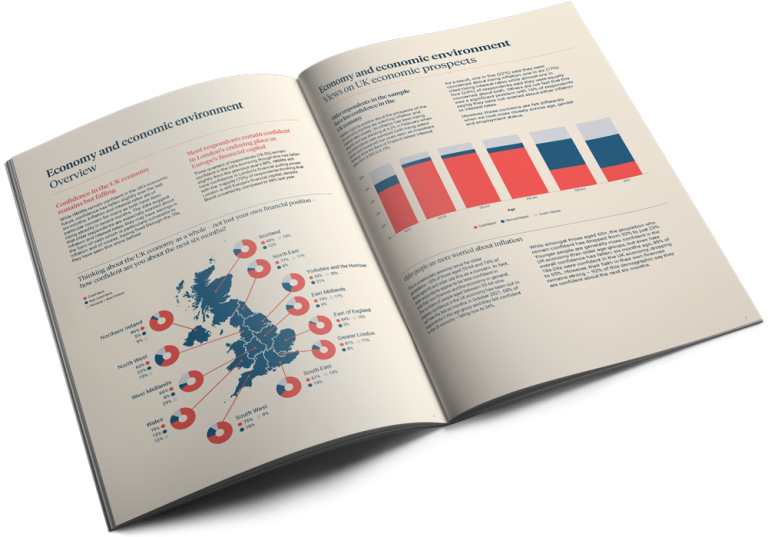
Confidence in the UK economy falls again as support for the Government wanes

The latest report shows that, after a brief rise six months ago, overall confidence levels in the UK economy have fallen, widening the gap even further from the levels recorded before the Labour Government’s first Budget back in August 2024.

Political opinion is also shifting. HNWIs’ support for Labour has dropped considerably over the last year from 42% to 30%, while support for Reform has grown from 13% to 18%, a figure that rises to 30% among those aged 55 and over. Support for the Conservatives has remained flat at 20%. This may reflect frustration with recent tax policy, particularly threshold freezes. HNWIs are especially concerned about those freezes relating to Income Tax rate thresholds and Inheritance Tax, with many respondents viewing both as unreasonably high and as significant barriers to economic growth. Other taxes seen as holding back the economy include Employer National Insurance and Corporation Tax.

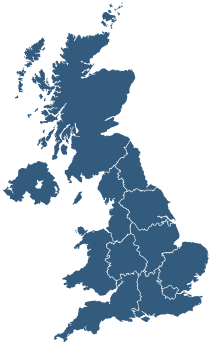
HNWIs’ confidence in UK economy as a whole

  • Confident
  • Not Confident
  • Neutral / I Don't Know
map of scotland
map of north uk
map of south east uk
map of south west uk
map of northern island
map of UK

The most unreasonably high tax

Reset

The UK’s economic prospects

Overall confidence in the UK economy falls from 66% to 59%

HNWIs’ confidence in the economy overall has fallen from 66% to 59%, while confidence in London specifically has dropped from 75% to 68%, potentially reflecting that ongoing uncertainty and growing unease around recent political decisions is weighing on sentiment in both cases.

Almost a quarter (23%) of HNWIs now describe themselves as unconfident, up slightly from 19%, including 6% who say they are very unconfident. Confidence is weakest among older respondents, with over 65s emerging as the most pessimistic cohort; 61% are unconfident in the UK economy, and fewer than one in ten (9%) say they feel confident.

Political regret is also becoming more pronounced; four in ten (41%) HNWIs voted for Labour in the last election, but only three in ten (30%) would do so again. Those that say they now regret voting for Labour cite concerns around underinvestment in the NHS (55%), the collapse in graduate employment (53%) and a series of tax and fiscal measures perceived to threaten wealth, including increases to Capital Gains Tax and changes to Inheritance Tax (both 50%), rising government borrowing (48%), the extension of VAT to private school fees (48%) and cuts to the Cash ISA allowance (48%).

Other key policy changes that have caused Labour HNW voters to regret their decision include increases to dividend tax (46%), the abolition of the two child benefit cap (46%) and the freeze on Inheritance Tax thresholds (43%).

Confidence in the UK economy by age of respondent

Reset

The reasons why those who voted Labour now regret it

Reset

HNWIs’ confidence in the UK economy over time

Reset

HNWIs’ rising confidence in the UK economy since August 2025

map of scotland
Scotland
arrow scotland
(3%)
map of north uk
North East
arrow north-east
(7%)
Yorkshire
arrow yorkshire
(10%)
North West
arrow north-west
(5%)
map of south east uk
East Midlands
arrow east-midlands
(6%)
East Of England
arrow east-of-england
(14%)
Greater London
arrow greater-london
(7%)
South East
arrow south-east
(11%)
map of south west uk
Wales
arrow wales
(11%)
West Midlands
arrow west-midlands
(10%)
South West
arrow south-west
(8%)
map of northern island
Northern Ireland
arrow northern-ireland
(28%)
map of UK

Tax

Higher rates of Income Tax and Inheritance Tax are still seen as the most ‘unreasonably high’ taxes

The Autumn Budget introduced landmark reforms to tax thresholds and salary sacrifice schemes, alongside a major cut to the Cash ISA allowance. These changes built on unpopular measures from the previous Autumn Budget, including the decision to bring unused pension funds and death benefits into an individual’s estate for Inheritance Tax, reshaping a long standing tax efficient wealth transfer route.

These changes have kept tax, and its perceived unfairness, at the forefront for HNWIs. Half (49%) feel they pay too much, with Income Tax leading the way, while one in five (22%) cite the higher rate as the most unreasonably onerous tax, followed by Inheritance Tax (16%).

While Inheritance Tax remains one of the most unpopular forms of taxation, HNWIs remain divided on how it should be reformed. Almost a third (30%) believe it should be abolished altogether, while half (50%) favour raising the threshold, up slightly from 46% in the previous report. One in eight (16%) would set it between £500,001 and £1,000,000, and 8% support a larger threshold of £2,000,001 to £5,000,000. On average, respondents think the threshold should rise to around £1,000,000 – a figure that is around three times the current level, and up from roughly £600,000 in the last report.

Against this challenging tax environment, ongoing geopolitical volatility – from trade tariffs and instability in the Middle East to uncertainty in the US political agenda – is intensifying pressure on investment decisions and heightening HNWIs’ focus on long term wealth preservation, making tax efficient planning increasingly critical.

“There has been a big increase in HNWIs enquiring if they should be taking action in light of the reforms unveiled in both the 2024 and 2025 Autumn Budget. What is of particular interest is the enquiries from those who previously were more relaxed about Inheritance Tax, especially where there are no direct descendants. This has led to more conversations around the strategies that can be adopted during one’s lifetime to reduce the Inheritance Tax liability.

We are also seeing younger clients starting to focus on Inheritance Tax, even pre-retirement, with trusts often being a key consideration on their minds, especially where minors are involved. This is a marked change from a few years ago when often trusts were perceived as too complex by HNWIs and preference swayed towards other options. Care needs to be taken here that any early IHT planning does not derail meeting future expenses.”

Henrietta Grimston
Chartered Financial Planner

Taxes holding back growth

HNWIs identify four taxes as key barriers to economic growth

The latest Wealth Index data show that HNWIs identify four taxes – two personal and two business – as the primary barriers to economic growth.

The personal taxes seen as the most prohibitive are the 40% and 45% rates of Income Tax – cited by one in five (20%) – and the basic rate of Income Tax at 20%, identified by one in ten (10%), with respondents suggesting that lower rates could boost consumer confidence and spending.

The two business focused taxes seen as key barriers to growth are Employer National Insurance and Corporation Tax – with around one in ten (11% and 10% respectively) identifying each as holding back growth. Almost one in ten (9%) also cite VAT as a barrier. This may be influenced by the introduction of VAT on private school fees in January 2025, particularly given that a large majority (75%) of respondents with children under 18 send their children to private school.

In contrast, Council Tax (5%), Stamp Duty on second homes or buy to let properties (4%) and Stamp Duty on principal residences (4%) rank at the bottom of HNWIs’ list of growth barriers, highlighting the fact that HNWIs see personal income and business taxation as key levers for wider economic expansion.

The taxes HNWIs believe are holding back economic growth

Reset

Personal finance

Overview

HNWIs’ confidence in their own finances has fallen, mirroring broader economic uncertainty

The report shows that HNWIs’ confidence in their personal finances has dipped over the past six months, reflecting both a challenging tax environment following the 2025 Autumn Budget and ongoing macroeconomic volatility. Inflation remains the biggest perceived risk to personal wealth, despite easing slightly since the previous report, followed closely by tax changes.

Wider concerns remain predominantly financial. More than half (56%) cite a money-related concern as their biggest worry, with the prospect of recession the top concern overall (16%), well ahead of health (11%), the wellbeing of children (10%) or being a victim of crime (3%) while almost four in ten (37%) say money is a source of anxiety, a figure broadly unchanged from six months ago (39%).

While private education remains a priority for most HNW parents, sending a child to private school is perhaps not as easy a decision as it once was. The latest data show that more than two thirds (68%) have already made, or plan to make, sacrifices to continue paying school fees following the introduction of VAT. At the same time, almost six in ten (59%) say they would rather invest £100,000 for their child than spend it on school fees.

HNWIs are also taking a more cautious approach to long term planning. Just 11% of HNWIs who have a pension pot used their full £60,000 pension allowance last year, with average contributions of £31,500, suggesting growing hesitancy or the impact of cost of living pressures around pensions.

A generational divide in advice is also emerging. While most HNWIs still favour professional guidance, 12% of 35-44 year olds would act on AI driven financial advice, compared with fewer than 1% of over 65s.

Confidence in own finances and wealth protection

Confidence dips as fragility remains

After rising from 86% a year ago to 92% six months ago, confidence in personal finances has dipped again and now sits at 87%, with those feeling ‘very’ confident falling from almost half (49%) to just over four in ten (41%).

Mirroring wider economic sentiment, it is older HNWIs who feel least confident about their own finances too. Almost one in ten (9%) of those aged 55-64 say they feel ‘unconfident’ about their financial position compared to fewer than 1% of 25-44 year olds.

Specifically, those older respondents with adult children are notably less confident. Only 73% of this cohort are confident, potentially reflecting parents’ concern over future tax rises, the perceived unfairness of Inheritance Tax and, ultimately, their children’s ability to support themselves financially – a concern underscored by the fact that seven in ten HNW parents with adult children are providing financial support for them, often with regular day to day costs as well as major expenses such as housing deposits.

This drop in confidence comes as many HNWIs say they have a limited understanding of the UK tax system. Fewer than a third (29%) say they are ‘very’ confident in their understanding of how tax affects their wealth, while almost one in ten (9%) do not feel confident at all, rising sharply to 17% among 55-64 year olds.

Additionally, significant gaps in basic wealth protection remain. Almost half (48%) of HNWIs do not have a will, only 13% have put conditions on gifts or inheritances to protect wealth from divorce or third parties, and just 16% of those who are married or in civil partnerships have a pre or post nuptial agreement in place, potentially leaving many exposed to unintended wealth erosion and a loss of control over how their assets are ultimately distributed.

HNWIs’ confidence in their own finances

Reset

AI and financial advice

HNWIs under 55 trust AI advice over friends and family when making financial decisions

The latest report shows that HNWIs are most likely to consult a professional adviser or planner when making financial decisions, with almost half (47%) saying they have done so. The next most common source of guidance is financial media, cited by 13% of respondents.

Ranked third, ahead of friends and family, are AI tools such as ChatGPT, Copilot, Gemini and Claude. Almost one in ten (9%) HNWIs say they have used AI to support financial decision making or planning, rising to 12% among under 55s. Notably, one in ten (10%) HNWIs under 55 say they would trust AI generated financial advice enough to act on it – this is higher than the 8% who would trust advice from their friends or family.

“AI is rapidly reshaping the financial advice profession, elevating expectations around efficiency, responsiveness and the quality of insight clients receive. Advisers are increasingly supported by AI-powered tools that streamline tasks such as report writing, data gathering, portfolio comparisons and CRM updates. This shift allows planners to focus more fully on the human side of advice, such as understanding client motivations, guiding longer term decision making and providing clarity during moments of uncertainty.

But while the technology adds real value, its (current) limitations are equally visible. Many clients I speak with describe AI as useful for quick explanations or initial research, yet consistently insufficient when applied to their real life circumstances where financial planning is concerned. They often highlight that AI’s answers feel overly generic, lack contextual understanding, or miss nuances around family dynamics, tax considerations or personal priorities. This gap between information and interpretation is where the role of the human adviser becomes most apparent.”

Kwasi Yeboah
Chartered Financial Planner

Sources of financial advice HNWIs would trust enough to act on

Reset

Risks and opportunities to personal wealth

Inflation and tax changes seen as the biggest risks to wealth in 2026

The latest Wealth Index Report shows that inflation remains the biggest concern for HNWIs for the third time running with over half (51%) of HNWIs listing it as their top concern, although this is down from 58% last time.

Tax changes come second (45%) again, for the third consecutive report, while concerns about interest rates have risen from fourth to third (30%), and geopolitical risks have climbed from sixth to fourth (28%), influenced by ongoing instability in the Middle East, trade tensions, and uncertainty around the US political landscape. These shifts have pushed energy prices down to fifth place and exchange rates from fifth to ninth, while concerns about ‘the rise of extremist political parties’ are now seen as a significant threat, with one in eight (16%) respondents citing this as the biggest threat to their wealth. Mortgage rates remain a low threat at 7%, similar to the 5% recorded in the previous report and 11th on the list of concerns.

Biggest risks to personal wealth, according to HNWIs

Reset

Biggest worries

Threat of recession remains the biggest single worry for HNWIs

When it comes to HNWIs’ biggest worries, financial or otherwise, economic concerns continue to dominate. The threat of recession remains the top concern, even though the proportion citing it has fallen from 24% in the previous Saltus Wealth Index Report to 16% today. This is still twice the level recorded in August 2024, when just 8% listed recession as their primary worry.

Next on the list is how respondents feel about their health and future tax rises under the current Government – both are top concerns for 11% of respondents, followed by the ‘wellbeing of my children’ (10%). Rising taxes on property or investment income comes next (9%), followed by geopolitical risks and the stock market going down. Children’s education, including paying school fees, was the biggest worry for 4% of HNWIs with children under the age of 18 (as well as those with grandchildren under 18), in line with the previous report.

This edition highlights growing concern among HNWIs about the value of their primary residence, with almost half (46%) worried about its current or future worth. Younger HNWIs (35-44) are the most anxious (59%), while older respondents aged 65+ are far less concerned (11%).

This difference could be driven by the fact that older respondents are more likely to have bought their home earlier than younger respondents. Older HNWIs have typically benefited from decades of house price growth and are more likely to be mortgage-free or close to it, whereas younger homeowners are more likely to have bought at higher prices, carry larger mortgages and be exposed to rising interest rates, leaving them more sensitive to market fluctuations.

Regional differences are also pronounced. More than half (53%) of London based HNWIs are concerned about their home’s value, compared to fewer than a third in the South East (36%) and the South West (36%). This reflects both the higher volatility of London’s housing market and the sharper impact of recent price corrections on high value properties.

More than a third (37%) of HNWIs report feeling anxious about their finances – flat on the 39% recorded six months ago – reflecting ongoing pressures from tax, inflation and economic uncertainty. At the same time, almost nine in ten (89%) view their wealth as a source of freedom, broadly unchanged from 90% in the previous report.

This tension highlights how many wealthy individuals are simultaneously financially secure yet increasingly conscious of the risks to their wealth, with anxiety driven less by day to day affordability and more by concerns around taxation, policy change and preserving wealth over the long term.

HNWIs’ biggest worries

Reset
Reset
Reset

The value of private education

Despite recognising the value of private education, the majority of HNWIs acknowledge an opportunity cost

According to the latest Wealth Index data, the majority (57%) of HNWIs attended private school at some stage of their schooling, rising to 70% of HNWIs now living in London.

Despite rising costs, 69% of HNWIs believe the quality of teaching and facilities justifies the expense, rising to more than eight in ten (81%) of those who attended private school, while two thirds (66%) also feel that private education delivers better long term outcomes than state schooling, compared to almost three quarters (74%) of those who attended private school themselves.

Beyond teaching quality and facilities, HNWIs place significant value on the wider benefits of private education, particularly networks and connections (72%) and non-academic opportunities such as high-level sport and extracurricular activities (68%). Among those who were privately educated themselves, conviction is markedly stronger, with over eight in ten citing networks and connections (84%) and enrichment opportunities (81%) as worth the investment.

While most HNWIs recognise the value of private schooling, the cost becomes harder to justify when considered as a lifetime education investment rather than as termly fees. This is illustrated by the fact that almost six in ten (57%) of those who had a private education would rather invest £100,000 for their own child – for example in an ISA or property – than spend it on school fees, rising to 62% of those who had a state education.

Furthermore, 51% of respondents believe there is a bias against privately educated students when applying to top universities, rising to 58% amongst those who went to private school for at least some of their education.

“In conversations with clients, we’re seeing that for many high net worth parents, paying for their children’s education remains a major aspiration, but the additional cost has forced a reassessment of what is affordable, what is sustainable, and what truly represents value over the long term.

For clients who were privately educated themselves, there is often a strong emotional pull. As the data suggest, many genuinely believe their education played a significant role in where they are today - not just academically, but through confidence, networks and wider opportunities - and they want to offer their children the same advantages. Many are prepared to make sacrifices to ‘make it work’, even in the face of rising fees and the additional impact of VAT.

At the same time, there are many HNW parents who are more pragmatic. Some question whether private education is always the right default, particularly where there are strong grammar or state schools locally. Others are comfortable with the idea that investing money for a child’s future - whether through property, ISAs or other long term vehicles - may deliver greater flexibility and value than school fees alone, even if they can afford private education.

It is not simply about affordability. It’s about values, priorities and perceptions of return on investment.” 

Alex Pugh
Chartered Financial Planner

Private school fees

VAT on school fees continues to cause education disruption

A year after the introduction of VAT on private school fees, the policy continues to have a significant impact on HNW families. Nearly two thirds (65%) of those with at least one child in private education say they have had to make changes to manage the additional cost.

Of these, around one in four (23%) have removed their child from their current private school. Some have kept them in private education by either moving them to an alternative, less expensive, private school (8%) or to a private school abroad (6%), while others have moved them out altogether, either into state school (6%) or to home school them (3%).

In addition to those who have already taken action, many others plan to. Around one in five (22%) plan to remove their child from their current school: 4% into state school and 3% to home school, while the rest plan to choose a cheaper private school either at home (8%) or abroad (6%).

In addition to those parents who have already had to disrupt their child’s education, over two thirds (68%) say they have or will have to make specific changes and sacrifices to enable their child to continue to attend private school – up from 55% in the previous report.

The most common sacrifices include cutting down on holidays and other big ticket discretionary spending. 42% say they have done or will do this, up from 29% six months ago, while over a third (35%) say they have or will have to cut down on everyday spending. For others, the sacrifices are more extreme. One in five (21%) say they either have or will get a new job that pays more and 16% say they will have to move to a different area that is more affordable.

One in five (20%) say they have reduced or will reduce pension contributions, while others are looking to borrow either by taking out an additional mortgage against their primary residence (13%), negotiating an unsecured loan (13%) or downsizing (12%). Others say they either have turned or will have to turn to friends (16%), their own parents – the children’s grandparents (4%) – or other family members (3%) for financial support.

The impact of rising school fees on HNWIs

Reset


Sacrifices made by HNW parents to keep their children in private school

Reset


Pensions

Most HNWIs are not making full use of their pensions allowance

While pensions remain central to the long term financial strategies of HNWIs, the latest findings show that the recent announcement that unused pensions pots will be brought under the scope of Inheritance Tax could be impacting pension savings, with most HNWIs failing to take full advantage of the tax efficient opportunities pensions still offer.

On average, respondents think they will need a pension pot of at least £930,000 for a comfortable retirement, with 35% believing they will need well over £1m. However, just 14% have a pot anywhere near that size – the average pension pot amongst respondents is £616,000, and more than half (53%) have £600,000 or less.

The data suggest that the rate at which HNWIs are saving into their pensions will not get them where they aspire to be by the time they retire. Just 11% of respondents who have a pension pot contributed the maximum of £60,000 to their pension in the last financial year, while only 14% plan to this year. The average pension contribution in 2024/25 was around £31,500 – just over half the annual allowance – while almost a third (31%) contributed less than £20,000.

There are potentially a wide range of reasons why HNWIs do not fully utilise their pensions; competing financial demands are a key factor, including covering rising private school fees – as mentioned earlier – and supporting adult children (73%) or ageing parents (54%).

A degree of caution around government policy also appears to influence behaviour, with many HNWIs anticipating more changes to pension rules within the next six months. As a result, many (26%) are considering strategies to protect their pensions from Inheritance Tax and considering using trusts and other vehicles to manage the tax exposure on their pension and estate (21%). Just 9% say they are not worried about the potential impact of Inheritance Tax on their pension.

Lifestyle

Overview

BOMAD meets BOSAD – the bank of HNWIs

Over the four and a half years that Saltus has been collecting data on HNWIs for the Wealth Index Report, intergenerational support has been a key theme and continues to be a defining feature in this latest iteration.

Once again, it is clear that respondents have considerable financial responsibilities and are often supporting multiple generations of family – from adult children and adult grandchildren to ageing parents – which places a unique set of demands on this ‘sandwich generation’ of HNWIs.

The latest data show that the vast majority of HNW parents (73%) have provided financial support to their adult children over the past five years, while half (54%) have done the same for ageing parents.

While this support is primarily for ‘big ticket items’ like house deposits, there is also a growing prevalence of support for more everyday costs, such as rent, bills and food shopping, particularly for older relatives, with many HNWIs sacrificing their own financial stability to help.

The data also show that the trend of the last few years of HNWIs looking to leave the UK – primarily for financial reasons – has not abated, with more than a quarter (26%) of respondents saying they have considered leaving the UK permanently.

Supporting others - children

Three quarters of HNW parents have provided financial support to adult children over the past five years, while 50% have supported adult grandchildren

Supporting adult children and grandchildren continues to be a defining feature of life for HNW families, reflecting the ongoing impact of economic uncertainty and the rising cost of living.

Three quarters of HNW parents (73%) have provided financial support to their adult children over the past five years, while half (50%) have supported adult grandchildren, underlining the extent to which the younger generations are relying on their parents and grandparents for financial help.

More than one in five (21%) respondents says they are currently providing regular financial support to their adult children, while over a quarter (27%) have provided a one-off lump sum in the last five years. One in seven (14%) say they provide gifts such as holidays, cars and experiences – rising to 30% for adult grandchildren – while one in 20 (5%) have set up a trust or financial structure to support their children. In addition, a further 7% say they plan to provide support in the future, despite not having done so yet, while fewer than one in ten (9%) say they have never provided any financial support to their adult children.

The average annual level of financial support provided to adult children now stands at £4,800, broadly in line with the £4,600 in the previous report, highlighting both the persistence and the scale of this support.

Apart from general living expenses (35%), the most common way in which parents are helping adult children remains the gifting of a house deposit – more than a quarter (28%) have done this. Almost a quarter (23%) say they are paying for holidays, while one in five (18%) say they are helping with rent or mortgage. Other reasons why HNW parents are providing financial support include household bills (15%), groceries (14%), transport expenses (15%), private healthcare (9%), and to help pay for a wedding (8%).

HNWIs providing financial support to adult children

Reset

Reasons why HNWIs are providing support

Reset


Supporting others – parents & grandparents

Drop in the number of HNWIs providing financial support to their parents

The latest data show that a substantial number of HNWIs have provided financial support to their parents. Overall, 54% say they have provided financial support over the past five years, with the number currently offering assistance sitting at 26%.

The reasons for this support have not changed – the vast majority of respondents still say that the financial support they are providing for older parents is to help with everyday expenses, the same as last year. These include groceries (50%), household bills (38%), medical or private healthcare (33%), general living expenses (29%), and holidays (28%).

On average, HNWIs are providing around £6,650 a year to their parents.

“For many high net worth families, the real pressure point isn’t “how much wealth do we have?”, it’s how many people are relying on it at once. Supporting adult children with deposits, helping parents with care costs, and still wanting to build a legacy for grandchildren can quickly turn into a cashflow challenge, so the starting point is getting clear on what support is ongoing, what’s one-off, and what you can commit to without quietly undermining your own long term security.

From there, tax efficiency is usually about structure and timing, not complexity for its own sake. We’re seeing more families use straightforward routes first, like making use of annual gifting allowances, setting up regular gifts from surplus income (so it doesn’t erode capital), and planning larger gifts early where appropriate because of the seven year Inheritance Tax clock. For some, trusts can add protection and control, particularly where family dynamics are sensitive or where grandparents want to ringfence money for grandchildren.

Since the 2025 Autumn Budget, there has been a noticeable increase in people asking for advice on gifting and wealth transfer. When policy feels uncertain, families want a more joined up plan that balances generosity, fairness, and control, while staying on the right side of the rules.”

Alex Pugh
Chartered Financial Planner

Reasons why HNWIs are providing financial support to their parents

Reset

Funding support for family members

HNWIs making sacrifices to support their family members

As we have seen, the majority of HNWIs are providing financial support to adult children or grandchildren, while half (54%) are also supporting ageing parents. The data show that while just over a third (37%) are able to fund this support from excess income, for the remainder it requires more fundamental financial adjustments – and, in many cases, personal sacrifice.

According to this latest report, one in five (20%) say they have cut back on personal discretionary spending such as treats, entertainment and clothing, while a further 16% have reduced spending on larger discretionary items, including holidays.

For others, the trade-offs are more significant. One in ten (10%) have accessed equity release to free up funds to support family members, while a similar proportion have sold property (9%) or other assets (8%), such as cars or jewellery.

Perhaps most concerning is the impact on long term financial security. Almost one in five say they have either withdrawn funds from their pension (9%) or reduced pension contributions (8%) in order to provide financial support to their families.

Taken together, this behaviour underlines a clear shift that financial support for adult children, grandchildren and ageing parents is no longer an occasional act of generosity, but a regular and embedded feature of household budgeting. As a result, HNWIs are increasingly having to factor these responsibilities into long term wealth planning, with 34% using investments to fund ongoing support and more than a quarter (27%) restructuring their finances in order to help.

“As advisers, we need to make sure a client’s own future is secure before they start gifting assets away, especially when this decision is irreversible. The power of cashflow modelling can be especially helpful to visualise their future and identify where opportunities lie. Outright gifting and other restructuring of assets needs to be carefully considered and should only be acted upon where it is affordable. Working with an adviser can ensure you are taking the right steps to protect your own future and that of your loved ones.

However, HNWIs who are not actively seeking advice could be making decisions that are not suitable. One of the big challenges faced today is that the proposed changes to IHT on pensions has, at the time of writing, not yet had Royal Assent. Therefore, acting before the legislation has been finalised risks taking the wrong decision, often with no ability to unwind that decision.”

Henrietta Grimston
Chartered Financial Planner

How HNWIs are funding support for family members

Reset

Leaving the UK

One in four HNWIs have considered leaving the UK

According to the latest report, a growing number of HNWIs are considering relocating from the UK in the next 12 months as concerns over tax – specifically the surcharge on properties worth over £2m, Inheritance Tax changes and VAT on private school fees – prompt an exodus.

The data show that 26% of respondents are considering leaving the UK permanently in 2026, with one in ten (11%) having actually set the wheels in motion.

The reasons HNWIs have considered leaving vary. For example, 5% say they are returning to their home country, 12% say it is because the UK does not feel like a good place to raise a family and 10% say they feel the UK is no longer connected to the world following Brexit.

But for more than half (51%), the primary driver is financial. One in ten (11%) say the lack of stability in the tax environment is the catalyst, while for 9% it is the introduction of additional taxes on wealth, for example, the surcharge on properties over £2m, that has made them consider leaving.

For 7% – rising to 9% of those with children under 18 – the addition of VAT on private school fees is the primary reason why they want to leave the UK. This is supported by the fact that, of those who have decided to remove their children from private school as a direct result of the addition of VAT, 6% say they will relocate so they can send their child to private school abroad.

The freeze on Income Tax thresholds is cited as the reason by 7%, while a similar number say they want to leave because of changes to Inheritance Tax (6%). A further 6% are opposed to the introduction of a pay per mile tax for electric vehicles.

The data show a real split amongst respondents on where they would relocate to. The United States is the top choice destination for HNWIs, with almost one in five (18%) of those considering leaving saying they are planning to relocate there, down from 22% in the last report. This is followed by Canada (7%), Spain (7%), the UAE (7%), France (6%), Australia (4%), Germany (4%), Portugal (4%), Singapore (4%), and Switzerland (4%).

One in 20 (5%) say they do not plan to relocate permanently to one location. While this is down from 12% in the last report, it still demonstrates the global mobility of some HNWIs.

“Conversations with clients over the past year reveal a marked shift in how high net worth individuals are thinking about their long term relationship with the UK. The latest data showing that one in four HNWIs have considered relocating reflects a growing reassessment of the financial, political and lifestyle dynamics shaping life here. Much of this sentiment is driven by uncertainty around the UK tax environment: surcharges on high value properties, changes to Inheritance Tax, VAT on private school fees and frozen tax thresholds are all prompting many families to evaluate their options more seriously than before.

However, these conversations also extend far beyond tax optimisation. Many clients are not planning permanent departures but are instead exploring a more globally fluid lifestyle - structuring their time across multiple jurisdictions while maintaining strong personal, professional, and emotional ties to the UK. For business owners, entrepreneurs and international families, the question is increasingly about flexibility and control rather than escape.

Clients are acutely aware that decisions around residency, travel patterns and economic ties can materially impact their tax position. They also frequently raise considerations around children’s education, access to healthcare, ageing relatives and maintaining a sense of belonging while living internationally. Meanwhile, destinations such as the US, Canada, Spain, the UAE and Switzerland continue to feature prominently, driven by lifestyle appeal and more predictable, or in some cases, lower, tax frameworks.

My role is to help clients navigate the intersection of financial reality and personal aspiration—ensuring any shift toward greater global mobility is wellplanned, aligned with their values, and anchored in longterm clarity.”

Kwasi Yeboah
Chartered Financial Planner

Why HNWIs are considering moving abroad permanently

Reset

Destination of choice for HNWIs permanently leaving the UK

France 6%
Germany 4%
Jersey 1%
Monaco 1%
Malta 1%
Portugal 4%
Spain 7%
Sweden 2%
I won't be relocating permanently to only one location 5%
Not sure yet 9%
Other 4%
Europe
Bahamas 1%
Canada 7%
Cayman Islands 1%
USA 18%
Virgin Islands 1%
I won't be relocating permanently to only one location 5%
Not sure yet 9%
Other 4%
North America
Australia 4%
Hong Kong 3%
Japan 3%
New Zealand 3%
Singapore 4%
UAE 7%
I won't be relocating permanently to only one location 5%
Not sure yet 9%
Other 4%
Rest of World
I won't be relocating permanently to only one location 5%
Not sure yet 9%
Other 4%
World map

Methodology

  • The research was conducted by Censuswide, among a sample of 2,002 UK respondents aged 18+ who have £250k+ investible assets. The data was collected between 31.12.2025 – 12.01.2026.
  • August 2025 survey: The research was conducted by Censuswide, among a sample of 2,003 UK respondents aged 18+, who have £250k+ investible assets. The data was collected between 05.08.2025 – 14.08.2025.
  • January 2025 survey: The research was conducted by Censuswide, among a sample of 2000 UK respondents (18+) who have £250k+ investible assets. The data was collected between 06.01.2025 – 13.01.2025.
  • Censuswide is a member of the Market Research Society (MRS) and the British Polling Council (BPC), and a signatory of the Global Data Quality Pledge. We adhere to the MRS Code of Conduct and ESOMAR principles.

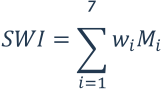
The formula which drives the Index is as follows:

Wealth index formula

This is the sum of the seven measures outlined below, Mi multiplied by their corresponding weights, wi.

  • Confidence in respondent’s own finances
  • Confidence about UK economy
  • Proportion of people who don't view interest rates, inflation, rising mortgage rates or high energy prices as one of their biggest risks to wealth
  • Confidence in London remaining as Europe’s financial capital
  • Anxiety about money
  • Belief in freedom that money can give
  • Belief that taxation is too heavy or too light

About Saltus

Saltus is a wealth management company that combines empathy and intellect in equal measure. We help our clients achieve their goals in life through expert financial planning as well as providing sharp focused investment management.

We started life as an investment management firm in 2004, yet over the years we saw that providing high quality investment management is just one of the ways we can help people achieve their aspirations.

Saltus Financial Planning was launched in 2015, with the aim of being an industry leader in providing financial advice. Saltus now employs over 450 people, and we have the privilege of looking after over £10.4bn for our clients.

Meet the experts

Saltus Financial Planning Ltd is authorised and regulated by the Financial Conduct Authority. Information is correct to the best of our understanding as at the date of publication. Nothing within this content is intended as, or can be relied upon, as financial advice. Capital is at risk. You may get back less than you invested. Tax rules may change and the value of tax reliefs depends on your individual circumstances.

Click here to download a PDF of the February 2026 report

Saltus Wealth Index February 2026 thumbnail

More reports...

Saltus Wealth Index Report - September 2025

Wealth Index Report

September 2025

Saltus Wealth Index Report cover February 2025

Wealth Index Report

February 2025

About Saltus?

Find out more about our award-winning wealth management services…

Shortlisted

Wealth Management Company of the Year (£10bn+ AUM)

Nominated

Good Money Guide Investment Awards 2026

Winner

Top 100 Financial Advisers

Winner

Best Wealth Manager

Shortlisted

Wealth Management Company of the Year (£10bn+ AUM)

Nominated

Good Money Guide Investment Awards 2026

Winner

Top 100 Financial Advisers

Winner

Best Wealth Manager

£10.5bn+

assets under advice

20

years working with clients

450+

employees

97%

client retention rate

£10.5bn+

assets under advice

20

years working with clients

450+

employees

97%

client retention rate